For over five decades, Sunset Sound Studio 1 has been the secret weapon behind some of the most iconic recordings in history. From The Doors to The Rolling Stones, Prince to Van Halen, countless hit records have been transformed by the legendary Chamber 1 reverb—a custom-built echo chamber that delivers an unmistakable warmth and dimension that digital reverbs have long struggled to capture.
Sunset Sound Chamber 1 brings this legendary acoustic space directly into your DAW through our hybrid reverb engine that combines authentic impulse response capture with sophisticated algorithmic processing—all running through a Sound Techniques-inspired channel strip.
Hybrid Reverb Engine: The Best of Both Worlds
At the heart of Sunset Sound Chamber 1 lies our Hybrid Reverb Technology—a dual-engine architecture that delivers authenticity and creative flexibility.
Pure IR Mode
Load the full impulse response for the most authentic reproduction of the physical chamber space. Experience every nuance of the room’s character exactly as captured from the legendary mics.
Hybrid Mode
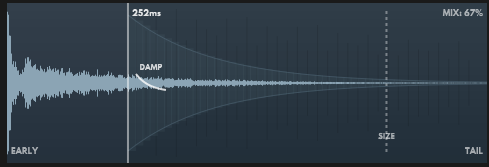
Our hybrid approach uses the impulse response for early reflections—the critical character-defining moments of the reverb—while a sophisticated algorithmic tail generator extends and shapes the decay. The system automatically analyzes the IR’s RT60 characteristics to match the algorithmic decay to the original space.
HybridSplit Control: Dial in exactly where the IR hands off to the algorithmic engine (0–1000ms), giving you precise control over how much “real room” versus “synthesized tail” you hear.
Vintage Chamber Microphones
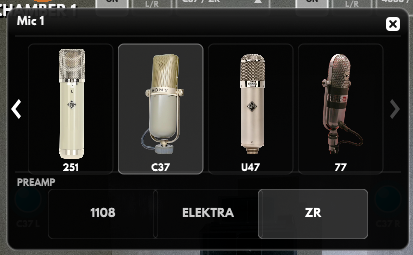
Sunset Sound Chamber 1 includes impulse responses captured with an extraordinary collection of vintage microphones and preamps—the same legendary models used on the classic recordings that made this chamber famous:
Neumann U47 – The king of studio microphones
Neumann U67 – Warm, detailed, and versatile
Neumann M49 – Rich low-end with silky top
Sony C37 – Vintage Japanese elegance
AKG C12 – Open, airy, and three-dimensional
RCA 44 – Classic ribbon warmth
RCA 77 – Broadcast legend
Coles 4038 – British ribbon character
Telefunken ELA M 251 – The “holy grail” of condensers
Each microphone imparts its own distinctive character to the chamber sound, giving you a palette of tonal options that would cost hundreds of thousands of dollars to assemble in the real world.
Sound Techniques-Inspired Channel Strip
The chamber passes through a fully capable, legendary Sound Techniques inspired console. This is THE channel that shaped the British recording sound of the 1960s and 70s.
Transistor Mic Preamp
The signal chain begins with our Vintage Transistor Saturation module—an emulation of discrete transistor preamp character:
Mic Gain (20–60 dB): At lower settings, the signal remains pristine. Push the gain and the preamp gradually introduces musical harmonic saturation
Asymmetric soft clipping generates both even and odd-order harmonics—just like the real thing
Automatic gain compensation maintains consistent output levels regardless of drive setting
Asymmetric Tilt EQ
A unique pre-reverb tone control that shapes the character of what feeds the chamber. It’s settings range from Deep to Flat to bright:
±12 dB range with asymmetric response—boost is 4× stronger than cut for musical results
Pivot frequency at 1kHz for natural tonal shaping
Brighten the input for shimmering high-frequency tails, or darken it for vintage warmth
Sound Techniques Channel
EQ
Shape the reverb’s frequency content with musical precision:
Low Cut: 20Hz–1000Hz high-pass filter with center skew at 200Hz
High Cut: 1000Hz–20kHz low-pass filter with center skew at 5kHz
High Shelf EQ: ±14 dB at 8kHz for presence and air control
Low Shelf EQ: ±14 dB at selectable 80Hz or 150Hz for body and weight
Pre-Delay
Global Pre-Delay: 0–500ms to separate the dry signal from the reverb onset
Algo Delay: Independent 0–500ms pre-delay for the algorithmic tail only
Width & Imaging
IR Width: 0–200% stereo width control for the impulse response (mono to extra-wide)
Algo Width: Independent stereo width for the algorithmic reverb
L/R Swap: Reverse the stereo image with a single click
Algorithmic Reverb Engine
When you engage Hybrid mode, our sophisticated algorithmic engine takes over the reverb tail—based on a fine tuned FDN (Feedback Delay Network) architecture with 17 room shapes smoothly interpolated for continuous size control.
Core Parameters
Size: Smoothly morphs between 17 carefully tuned room sizes
Damping: High-frequency absorption for natural decay characteristics
Bandwidth: Input filtering for the algorithmic path
Density: 8-stage stereo all-pass diffuser network controls reflection density and “bloom”
Modulation
Built-in chorus modulation adds life and movement to the algorithmic tail:
Mod Rate: 0–10 Hz
Mod Depth: Subtle shimmer to dramatic pitch wobble
Multi-Tap
Enable 4 additional delay taps with stereo spread for increased complexity and width.
80s Gated Reverb
Sunset Sound Chamber 1 includes a dedicated 80s-style reverb gate—inspired by the SSL, Drawmer, and AMS gates that defined the sound of the era.
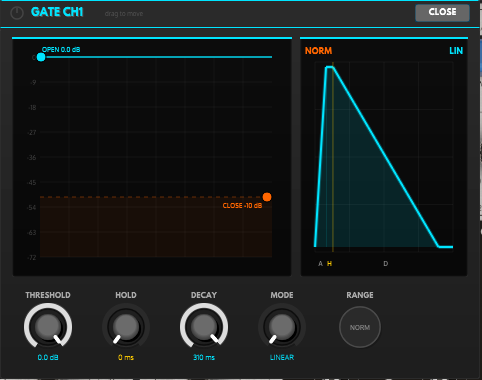
Gate Parameters
Threshold: -60 to 0 dB—set where the gate opens
Hold Time: 0–500ms—the crucial “sustain before chop” that defines the 80s gated sound
Decay Time: 5–320ms—how quickly the gate closes
Decay Style: Blend between linear (classic 80s abrupt chop) and exponential (smoother, more natural)
Hysteresis: 6dB offset between open and close thresholds prevents gate chatter
Create everything from subtle tightening to full-on Phil Collins drum sounds with ease.
Vintage Compressor
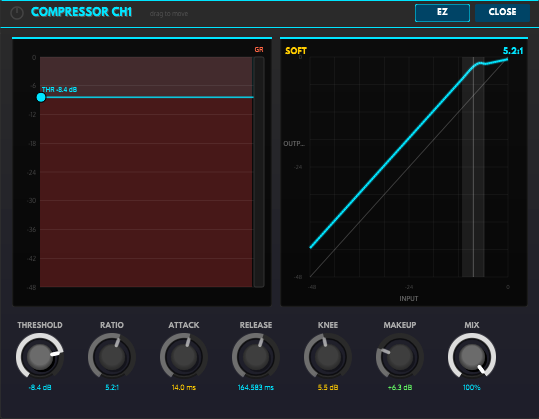
Following the reverb, an optional Vintage Compressor adds musical dynamics control and harmonic enhancement:
Full Manual Control
Threshold: -60 to 0 dB
Attack: 0.1–100ms (logarithmic scaling)
Release: 10–2000ms (logarithmic scaling)
Ratio: 1:1 to 20:1 (limiting)
Knee: 0–12 dB soft knee width
Makeup Gain: 0–24 dB
EZ Mode
Enable program-dependent auto-calculation: the limiter automatically sets attack, release, ratio, and knee based on your threshold setting—higher thresholds yield gentle glue compression, lower thresholds deliver aggressive pumping.
Creative Effects Suite
Sunset Sound Chamber 1 goes beyond traditional reverb with a powerful suite of creative effects that can transform your chamber sound from authentic vintage reproduction to otherworldly sonic landscapes.
Shimmer
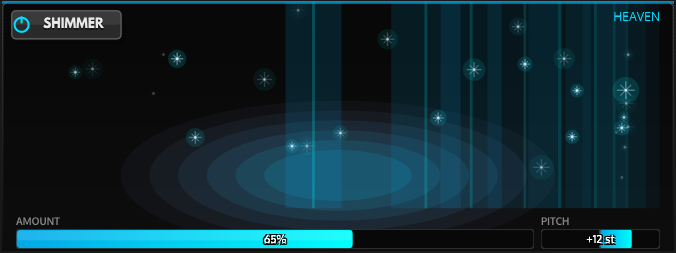
Create lush, evolving textures with our dual-window granular pitch shifter feeding back into the reverb tail.
How It Works: The Shimmer effect takes the reverb output, pitch-shifts it using a sophisticated granular algorithm with 50ms crossfading windows, then feeds it back through a bandpass filter into the reverb input. The result is an ever-building cascade of harmonically-related tones that bloom and evolve over time.
Parameters:
Shimmer Gain (0–100%): Controls how much pitch-shifted signal feeds back into the reverb. Start subtle (20–30%) for ethereal enhancement, or push higher for dramatic, cascading textures
Shimmer Pitch (±24 semitones):
+12 semitones (octave up): The classic shimmer sound—angelic, crystalline, and ethereal
-12 semitones (octave down): Dark, subterranean textures with building low-end
Smaller intervals: More subtle harmonic enhancement
Technical Details:
Bandpass filter (200Hz–4kHz) on the feedback path prevents mud and harshness
Soft clipping (tanh saturation) catches runaway feedback before it becomes harsh
Bidirectional pitch range allows both ascending and descending shimmer effects
Use Cases:
Ambient guitar swells and pad textures
Cinematic soundscapes and trailer music
Worship and atmospheric vocal effects
Sound design for film and games
Lo-Fi Degradation
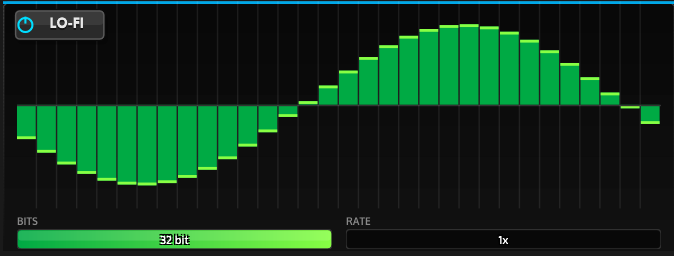
Add vintage character, nostalgic grit, or experimental texture with our bit crusher and sample rate reducer.
How It Works: The Lo-Fi module applies digital degradation after the reverb processing, allowing you to maintain the authentic character of the chamber while adding controllable digital artifacts. This mimics the sound of early digital reverbs, lo-fi samplers, and degraded recordings.
16 bits: Subtle quantization—adds a touch of “finished master” sheen
12 bits: Classic sampler territory—warm and slightly gritty
8 bits: Retro video game and early sampler character
4 bits: Extreme, heavily stepped distortion for sound design
Sample Rate Division (1–50×):
1×: Full sample rate (bypassed)
2–4×: Subtle high-frequency softening and aliasing
8–16×: Pronounced “crunchy” digital artifacts
32–50×: Extreme degradation with heavy aliasing and artifacts
Technical Details:
Input is soft-limited to ±1.0 before processing to prevent extreme values
Sample-and-hold circuit accurately emulates vintage digital conversion
Processes both channels independently for authentic stereo degradation
Use Cases:
Vintage drum machine reverb sounds
Lo-fi hip-hop and bedroom pop aesthetics
Tape machine and early digital reverb emulation
Harsh noise and experimental textures
Creating “found footage” or degraded recording effects
Freeze
Capture and infinitely sustain the current reverb tail for drones, textures, and sound design.
How It Works: When Freeze is engaged, the algorithmic reverb’s feedback is set to maximum (infinite decay), causing the current reverb content to sustain indefinitely without decaying. New input can still feed into the frozen texture, allowing you to layer sounds on top of the sustained wash.
Parameter:
Freeze (On/Off): When engaged (>0.5), sets the reverb decay to infinite
Creative Techniques:
Drone Creation: Play a chord, engage Freeze, and let it sustain while you perform over the top
Textural Layering: Freeze a reverb tail, then play new material that blends with the frozen texture
Build-ups: Gradually layer multiple frozen moments for massive, evolving soundscapes
Sound Design: Capture transient moments and stretch them into infinite sustains
Pro Tips:
Combine Freeze with Shimmer for continuously evolving, pitch-shifted drones
Use the Lo-Fi effect on frozen tails for degraded, otherworldly textures
Automate Freeze on/off for dramatic arrangement moments
The Gate can be used to rhythmically chop frozen textures
Reverb Ducking
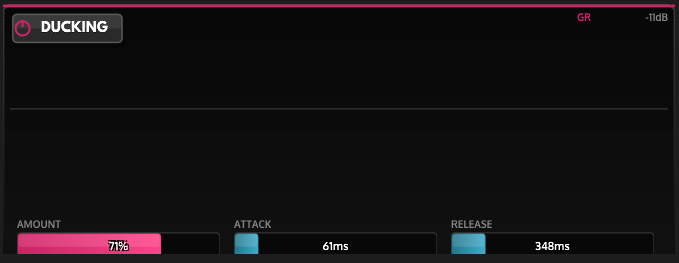
Keep your mix clear and punchy with intelligent sidechain-style ducking that automatically reduces reverb level when signal is present.
How It Works: The Ducking module uses an envelope follower that tracks the pre-reverb input signal level. When the input is loud, the entire processed output (reverb + effects) is attenuated. When the input drops, the reverb smoothly returns to full level. This creates space for your dry signal while letting reverb tails bloom naturally in the gaps.
Parameters:
Duck Amount (0–100%):
0%: No ducking—reverb plays at full level regardless of input
25–50%: Subtle ducking—reverb gently moves out of the way
75–100%: Aggressive ducking—reverb nearly disappears during loud passages
Duck Attack (1–100ms):
Fast (1–10ms): Ducking engages immediately—tight, punchy response
Medium (10–50ms): Lets transients through before ducking—more natural feel
Slow (50–100ms): Gradual ducking—creates a “swell” effect as reverb fades
Duck Release (10–500ms):
Fast (10–50ms): Reverb returns quickly—more reverb presence, busier sound
Medium (50–200ms): Natural return—reverb blooms between phrases
Slow (200–500ms): Reverb slowly fades back in—dramatic, cinematic effect
Technical Details:
Peak detection on stereo input (uses maximum of L/R channels)
Separate attack and release coefficients for precise envelope shaping
Soft-knee gain curve: (1 – duckLevel)² × (1 – duckLevel × 0.5) for musical response
Ducking is applied after all other processing (gate, limiter, EQ)
Use Cases:
Vocals: Keep reverb from muddying the voice during singing, let it bloom on pauses
Drums: Tight, punchy drum hits with reverb tails that appear between hits
Podcasts/Dialog: Reverb adds ambience but stays out of the way during speech
Electronic Music: Sidechain-style pumping effect synchronized to transients
Mixing Dense Arrangements: Prevent reverb buildup from cluttering the mix
Pro Tips:
For classic “pumping” reverb, use fast attack, medium release, and high amount
For natural-sounding ducking, use medium attack and release with subtle amount
Combine with the Gate for ultimate control over reverb dynamics